
Blockchain for data sharing delivers trustless access registries, immutable audit trails, and tokenized monetization that let data providers monetize directly while preserving data sovereignty. For investors evaluating token ecosystems like Ditgold and its native ERC-20 token DitAu, the immediate action is clear: require on-chain registries paired with off-chain encrypted storage, run a limited pilot, and stress-test tokenomics and governance before committing capital.
Three signals matter most right now:
- Trust model shift: Smart contracts replace centralized data brokers, giving providers cryptographic control over who accesses their data and when.
- Regulatory exposure: U.S. investors must account for CCPA/CPRA, HIPAA for health data, and SEC token classification before any capital deployment.
- Ecosystem maturity: Projects that abstract key management into intuitive utilities see meaningfully higher adoption among professional users than those that expose raw cryptographic operations.
Blockchain’s greatest advantage for data sharing is enabling verifiable data sovereignty: auditors can check immutable access logs without ever exposing the raw datasets underneath.
Table of Contents
- How does blockchain actually change data sharing?
- How tokenization creates investor value in data marketplaces
- What security and privacy controls should investors require?
- U.S. legal and compliance checklist for investors
- What are the biggest adoption barriers and how do you score project risk?
- How should investors run due diligence on blockchain data projects?
- What do pilots and production deployments actually cost?
- How does a tokenized data marketplace work in practice?
- When should investors pilot, wait, or walk away?
- Key Takeaways
- Data is the new gold: a perspective on what this market demands
- Ditgold and the investor checklist: your next step
- Useful sources for further research
How does blockchain actually change data sharing?
Legacy cloud and brokered data-sharing models depend on a trusted third party to enforce access rules and maintain logs. Blockchain replaces that central authority with smart contracts and on-chain registries that execute automatically, log every transaction immutably, and let data owners grant or revoke access via cryptographic signatures without any central administrator.
What stays the same: large datasets cannot economically live on-chain. The standard architecture stores only metadata, content hashes, and access records on-chain, while the actual encrypted payload sits in a decentralized file system such as IPFS or Swarm, or in encrypted cloud storage. The THROTTLE architecture illustrates this well, storing logs off-chain and anchoring only hashes and CIDs on-chain, keeping blockchain storage proportional to file count rather than file size.
Core architecture components:
- On-chain registry: access policies, payment logic, provenance hashes
- Off-chain encrypted storage: IPFS, Swarm, or enterprise cloud with AES/ECC encryption
- Decentralized interface: handles encryption, retrieval, and key operations for end users
- Oracle layer: bridges off-chain data verification to on-chain contract logic
Pro Tip: Most projects over-index on “on-chain everything” in their pitch decks. If a team cannot explain precisely what lives on-chain versus off-chain and why, treat that as a technical red flag, not a feature.
How tokenization creates investor value in data marketplaces
ERC-20 tokens serve as the liquidity and incentive rails for decentralized data marketplaces, enabling staking, fee collection, and secondary-market trading of data access rights. Smart contracts automate payments and royalties the moment a data query is fulfilled, eliminating intermediary extraction and compressing settlement from days to seconds.
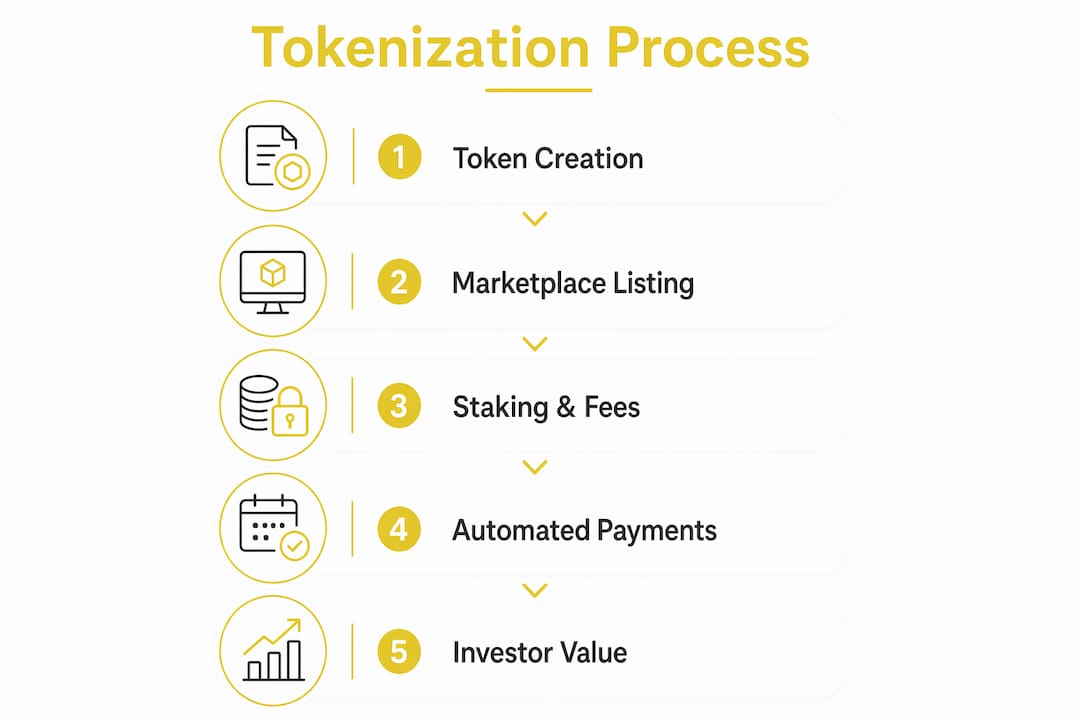
Monetization models worth evaluating include pay-per-query, subscription licensing, data unions where contributors pool and share revenue, and cooperative models where participants govern pricing collectively via DAO vote. Each model produces different revenue cadences and token velocity profiles, which directly affect investor returns.
Valuation checklist for token-based data ecosystems:
- On-chain access request volume and growth rate
- Revenue flows from data licensing versus speculative token trading
- Token supply schedule and inflation/deflation mechanics
- Staking participation rate and lock-up depth
- Secondary-market liquidity on decentralized exchanges
Research on smart-contract incentive flows confirms that automated payment rails reduce intermediary costs and improve accountability for data providers, a structural advantage over traditional brokered models.
What security and privacy controls should investors require?
Encryption before sharing is mandatory. Blockchain provides a tamper-proof access registry, but it is not a substitute for encrypting payloads off-chain. AES or ECC encryption must be applied before data enters any shared environment, and on-chain records should store only encrypted hashes, never plaintext or plaintext-revealing structure.
Blockchain’s open nature means metadata itself can leak sensitive information. Privacy-preserving designs must combine encryption, selective disclosure, and access registries to maintain auditability without exposure. NFT-based provenance schemes that embed digests of off-chain data using ECC offer one practical traceability mechanism investors can verify during due diligence.
Security checklist investors should demand from project teams:
- AES-256 or ECC encryption applied locally before any upload
- Key management with intuitive UX and auditable recovery paths
- On-chain hash anchoring for every off-chain file
- Oracle strategy documented and tested for off-chain verification
- Zero-copy or containerized compute patterns for enterprise analytics workflows
- Third-party smart contract audit completed and published
Pro Tip: Key-management UX is the primary adoption hurdle in production deployments. Ask teams to demo the key recovery flow for a non-technical user. If it requires manual seed phrase handling, adoption will stall outside crypto-native audiences.
U.S. legal and compliance checklist for investors
Privacy and data protection obligations are layered in the U.S. CCPA/CPRA applies to consumer data held by California-based entities or entities serving California residents, requiring consent records, deletion rights, and data processing agreements. HIPAA constrains any health data sharing architecture, mandating Business Associate Agreements and strict access controls that must map to the project’s smart-contract permission model. Data localization requirements may force architecture changes for projects serving regulated industries.
Token and securities risk is the sharpest legal edge. Investors must evaluate whether a token functions as a security under SEC guidance using the Howey test: does it represent an investment of money in a common enterprise with an expectation of profit from others’ efforts? Token distribution concentration, utility versus speculative demand, and the presence of a secondary market all factor into that analysis.
Compliance checklist to require from founders:
- Data processing agreements with all data providers and consumers
- Consent records and audit logs meeting CCPA/CPRA standards
- HIPAA BAAs in place for any health data vertical
- Legal opinion on token classification under Howey
- Tax reporting framework for token rewards and staking income
Any U.S.-facing data marketplace that skips a formal token classification opinion before launch is transferring regulatory risk directly onto its investors. Require the legal memo, not a verbal assurance.
This article is general information, not legal or financial advice. Confirm current regulatory requirements with qualified legal counsel for your specific situation.
What are the biggest adoption barriers and how do you score project risk?
The barriers are as much organizational as technical. Key-management usability tops the list: most professional users will not manage raw cryptographic keys manually, and projects that abstract this into secure, recoverable utilities see dramatically higher uptake. Governance complexity, enterprise integration friction with legacy systems, and scalability costs for high-volume data queries follow closely.
Risk checklist with mitigations:
- Key-management UX: Require a demo of the end-user key flow; look for hardware wallet or MPC-based recovery.
- Governance complexity: Evaluate DAO voting participation rates and quorum thresholds; low participation signals governance capture risk.
- Enterprise integration: Ask for a documented API and at least one production integration with an enterprise data store.
- Scalability: Confirm the team has benchmarked gas costs and latency at target query volumes.
Simple scoring framework (rate each 1–5):
- Technical architecture: encryption model, off-chain storage, oracle strategy
- Team credibility: prior deployments, audit history, domain expertise
- Tokenomics: supply schedule, utility clarity, liquidity depth
- Go-to-market: signed data providers, active consumers, revenue evidence
- Regulatory readiness: legal opinions, compliance documentation, DPAs in place
A project scoring below 3 on any single dimension warrants a deferral, not a pilot.
How should investors run due diligence on blockchain data projects?
Technical due diligence starts with the architecture diagram. Confirm the separation between on-chain governance and off-chain execution. Lack of that separation is a common failure mode in production systems. Verify the encryption model, oracle strategy, and integration with IPFS, Swarm, or an enterprise zero-copy pattern like Delta Sharing.
Tokenomic and market checks center on supply schedule transparency, token utility versus security characteristics, fee flows into the treasury, and liquidity on decentralized exchanges.
| Due Diligence Dimension | Key Questions | Red Flags |
|---|---|---|
| Architecture | On-chain vs. off-chain separation clear? | “Everything on-chain” claims |
| Encryption | AES/ECC applied pre-upload? | Plaintext hashes on-chain |
| Smart contracts | Third-party audit published? | Unaudited contracts in production |
| Tokenomics | Supply schedule transparent? | Team holds >40% of supply |
| Governance | DAO participation rate healthy? | Founder veto over all votes |
| Regulatory | Legal opinion on token classification? | No legal counsel engaged |

Top red flags: unaudited smart contracts, no working off-chain storage integration, token supply concentrated in founding team wallets, and no documented revocation mechanism for data access.
What do pilots and production deployments actually cost?
Typical project phases run longer than most pitch decks suggest. A pilot takes several months to validate the encryption model, smart-contract logic, and an initial data provider integration. Security hardening and enterprise integration add another 3–9 months. Marketplace launch with meaningful liquidity build requires 3–12 months beyond that.
| Phase | Duration | Primary Focus |
|---|---|---|
| Pilot | 3 months | Encryption, smart contracts, one live integration |
| Integration & hardening | 3–9 months | Oracle strategy, compliance, enterprise connectors |
| Marketplace launch | 3–12 months | Liquidity incentives, provider onboarding, marketing |
Major cost buckets investors should size during term negotiation:
- Engineering: smart contract development, oracle integration, API connectors
- Storage and compute: off-chain encrypted storage, containerized analytics
- Audits and compliance: smart contract audits, legal opinions, DPA drafting
- Token launch: liquidity pool seeding, exchange listings, legal structuring
- Marketing and incentives: data provider acquisition, staking rewards, community growth
How does a tokenized data marketplace work in practice?
Consider an illustrative example modeled on Ditgold’s architecture. A data provider encrypts a dataset locally using ECC, stores the encrypted payload in IPFS, and mints an on-chain access record containing the content hash and licensing terms. A smart contract enforces payment and access: when a buyer submits DitAu tokens, the contract releases the decryption key and logs the transaction immutably.
Investor metrics to watch in this workflow: on-chain access request volume, revenue per data asset, staking participation depth, and secondary-market liquidity for DitAu. These four indicators together reveal whether the ecosystem is generating real economic activity or relying on speculative token demand.
In a well-designed tokenized data marketplace, every access event is a revenue event. Investors should track access request growth the same way SaaS investors track monthly active users.
Where Ditgold meets the due-diligence checklist:
- Off-chain encrypted storage with on-chain hash anchoring
- DitAu token as the staking, fee, and reward instrument
- DAO governance for ecosystem policy decisions
- Privacy KYC tool and Meme Momentum Index as live utility signals
- Decentralized data marketplace in development, with AI validation agents planned
When should investors pilot, wait, or walk away?
Pilot if the project has auditable encryption, a working off-chain storage integration, clear token utility beyond speculation, and at least one signed data provider. These four conditions together indicate the team has moved past whitepaper stage.
Defer if key-management UX is unresolved, governance is founder-controlled with no credible path to decentralization, or the legal opinion on token classification is absent.
Minimum demands before writing a check:
- Published third-party smart contract audit
- Data processing agreements with all data providers
- Documented access revocation mechanism
- Token distribution schedule with vesting details
- Legal opinion on token classification under Howey
Decision flow:
- Does the architecture separate on-chain governance from off-chain execution? If no, stop.
- Is encryption applied pre-upload with auditable key management? If no, stop.
- Is there a legal opinion on token classification? If no, require it before proceeding.
- Does the project score 3 or above on all five scoring dimensions? If yes, proceed to pilot.
Key Takeaways
Blockchain for data sharing creates investor value only when on-chain registries, off-chain encrypted storage, and clear token utility operate together under a compliant, auditable architecture.
| Point | Details |
|---|---|
| Trust model shift | Smart contracts replace centralized brokers, giving data owners cryptographic control over access and revocation. |
| Mandatory security controls | AES or ECC encryption must be applied before any data enters a shared environment; on-chain records store hashes only. |
| Tokenomics checks | Evaluate supply schedule, token utility versus security characteristics, staking depth, and fee flows before committing capital. |
| Key regulatory flags | U.S. projects must address CCPA/CPRA, HIPAA for health data, and SEC Howey analysis for token classification. |
| Ditgold and DitAu | Ditgold’s architecture pairs off-chain encrypted storage with on-chain registries and DitAu token utility, meeting the core investor checklist. |
Insist on auditable off-chain encryption and on-chain registries as non-negotiable baseline requirements before any pilot funding.
Data is the new gold: a perspective on what this market demands
The conventional wisdom in token investing is to lead with the whitepaper and the team. That instinct is not wrong, but it misses the more revealing question: does the project’s architecture actually enforce what the whitepaper promises? In blockchain-based data sharing, the gap between promise and implementation is wide. Teams that understand encryption, key management, and oracle design at a production level are rare. Teams that can pitch them are not.
What the market underestimates is how much of the value in a data marketplace accrues to whoever solves key-management UX. The cryptographic primitives are largely solved. The user experience of managing, recovering, and auditing keys at scale is not. Projects that crack that problem will capture the professional and enterprise segments that currently sit on the sidelines.
Ditgold’s thesis, that data is the new gold, a limitless and non-depleting asset, is directionally correct and increasingly well-supported by enterprise data-sharing trends. The DitAu token’s role as a staking, fee, and reward instrument maps cleanly to the monetization mechanics that research confirms work in decentralized marketplaces. DAO governance for ecosystem policy decisions is the right structural choice, provided participation rates stay healthy and founder veto power is genuinely constrained over time.
Investors who apply the scoring framework in this guide, and who insist on the minimum pilot requirements before committing capital, will separate the projects building real infrastructure from those selling a narrative. The data economy is real. The question is which architectures will still be standing when it matures.
Ditgold and the investor checklist: your next step
Ditgold is built for exactly the investor profile this guide describes: technically informed, compliance-aware, and looking for a data asset ecosystem with real token utility rather than speculative hype. The DitAu token powers staking, fees, and rewards within a decentralized architecture that pairs off-chain encrypted storage with on-chain registries, matching the baseline controls this guide identifies as non-negotiable.
The platform’s live utilities, including a privacy KYC tool and Meme Momentum Index, demonstrate active ecosystem development beyond the whitepaper stage. DAO governance gives token holders a direct voice in ecosystem policy, and a decentralized data marketplace with AI validation agents is on the roadmap. For investors ready to evaluate a token ecosystem against a real due-diligence framework, the 2026 investor’s guide on data tokenization is the right starting point. Visit Ditgold to request a pilot overview or connect with the team directly.
Useful sources for further research
- A Blockchain-Based Framework for Secure Data Sharing Using IPFS and ECC: Covers on-chain metadata plus off-chain encrypted storage architecture and prototype performance benchmarks. Start here for technical architecture validation.
- A Decentralized Architecture for Trusted Dataset Sharing Using Smart Contracts and Distributed Storage: Documents smart-contract incentive flows, key-management usability findings, and marketplace accountability mechanics. Essential for tokenomics and governance due diligence.
- A Security-Oriented Data-Sharing Scheme Based on Blockchain: Details mandatory pre-sharing encryption, NFT-based provenance, and metadata privacy tradeoffs. Use for security checklist validation.
- Empowering Trusted Data Sharing in a Federated Environment: A Blockchain-Based Approach: Explains the THROTTLE architecture for off-chain log storage with on-chain CID anchoring. Relevant for compliance and auditor workflows.
- A Blockchain Platform for User Data Sharing Ensuring User Control and Incentives: Case study of smart-contract-governed incentive flows and user-controlled privacy policies. Useful for evaluating token reward mechanics.
- Delta Sharing (Databricks): Reference for zero-copy enterprise sharing patterns that reduce egress costs. Relevant when evaluating hybrid blockchain plus enterprise data-sharing architectures.
Recommended
- Blockchain for Data Security: 2026 Investor’s Guide – DitGold | Data is the New Gold – Blockchain Data Economy Token (DITAU)
- What Is Data Sharing? A Clear 2026 Guide – DitGold | Data is the New Gold – Blockchain Data Economy Token (DITAU)
- Decentralized Data Marketplace: A 2026 Guide for Tech Pros – DitGold | Data is the New Gold – Blockchain Data Economy Token (DITAU)
- Top 6 Best Decentralized Data Marketplace 2026 – DitGold | Data is the New Gold – Blockchain Data Economy Token (DITAU)